site site.xsl LongwoodGardens

section nav_section.xsl section_the_gardens

The Gardens

page pg_lev4_list.xsl Sustainability_at_Longwood

Sustainability at Longwood

Does Longwood recycle?

Longwood strives to be a model for recycling and re-use for the community. Our environmental practices are firmly grounded in our mission as the living legacy of Pierre S. du Pont, inspiring people through excellence in garden design, horticulture, education and the arts.

Longwood has instituted a recycling task force, whose vision is to keep eliminating the amount of trash that we send to landfill until, one day, there is no trash to take away because it was all reduced, recovered, re-used or recycled.

Currently, Longwood recycles:
• All paper products and cardboard (except waxed cardboard)
• Aluminum
• Batteries
• Florescent bulbs
• Food waste
• Glass
• Horticultural waste
• Paint
• PCs and monitor
• Plastics (#’s 1 through 5), plastic flower pots
• Scrap metal
• Tires
• Waste oil

Does Longwood Compost?

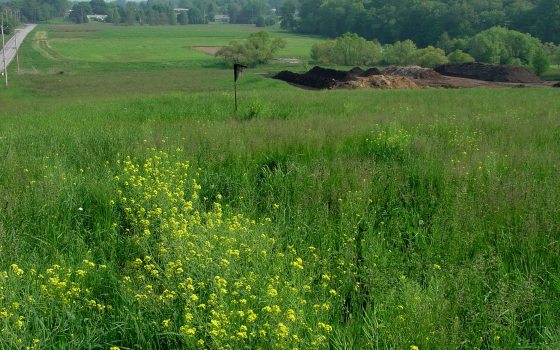
Longwood Gardens began its compost program in the early 1990s. Today, all horticultural debris and food residuals are collected, composted and returned to the Gardens to enhance our site.

Our composting program collects 8,000 cubic yards of discarded organic material from on-site and local contractors annually and saves $50,000 to $200,000 in costs to landfill discarded organic matter.

Learn more about Longwood’s Composting Operation.

What is composting?

Composting is the process of using active, controlled decomposition to recycle waste organic matter into various finished products that are useful for growing plants and improving soil.

How is compost made?

Compost can be made in many different ways but always involves gathering organic matter into piles or bins and then harnessing and accelerating the natural process of decomposition. It requires green (nitrogen-rich) materials, brown (carbon-rich) materials, air, water, and decomposers like microbes and earthworms. Mixed at the right ratios, these ingredients create compost over time (anywhere from a few weeks to a few years). At Longwood Gardens, we collect organic wastes from on site, as well as from community farms and businesses, to create different types of composted products. This includes our hardwood and leaf mulches as well as our finished compost product. 

Why compost?

Compost is a great amendment for soil beds and potting mixes as it increases organic matter, improves structure, supplements nutrients, and boosts beneficial organisms. It is also a great way to recycle. Items such as brush, discarded green plant material, and food scraps, which would otherwise take up space in a landfill, are transformed into a useful product through composting. At Longwood, we recycle all discarded organic matter on site through our composting operations.

Read some tips for composting at home.

How is compost used?

Compost is used as a soil amendment in many different capacities. Its main use for home gardeners is as an addition to a planting bed or a potting mix. It can also be spread on the surface of agricultural fields and turf grass or used as a cover over tree rings and planting beds. Although it is a very valuable product, compost is not soil and therefore it lacks some of the important structural components, nutrients, and living organisms that make soil so good at supporting plant growth. It also lacks the qualities of potting mixes which are carefully formulated for plant growth. For these reasons, make sure to use compost as a soil amendment instead of a soil replacement.

What is The Terrace doing to preserve our environment?


Local Food Sources

The Terrace is working with local farmers and produce distributors to provide our guests with the freshest seasonal foods while supporting our local farms. Local food means a dramatic reduction in transportation emissions, days of refrigeration, and packaging. Longwood is a proud member of the Pennsylvania Association of Sustainable Agriculture, working to further the connections between people and their food. 

Longwood seasonally grows herbs, fruits and vegetables in the Idea Garden, which are used in the 1906 Fine Dining Room. This means zero food mileage adversely affecting our environment!

Compostable Dishware, Cups, Bottles

While both compostable and ceramic dishes require resources to make and maintain them, Longwood has chosen to use compostable dishes in our Café for several reasons.

  • Almost all of the compostable ware used in The Terrace goes to Longwood’s large scale compost facility.  Instead of going to the landfill, it returns to the Gardens or our farm lands. This helps us close the loop by keeping organics here on site - nourishing our soils instead of creating waste.
  • While Compostable dishes may take years, even decades, to break down in a landfill, they do eventually break down. A plastic or ceramic dish will not. The energy, hot water, and detergent required to maintain re-usable dishware is also not needed.

Even our current spring water is bottled in a compostable plant-based product instead of plastic – it gets composted right along with our food waste!

Recycling

Materials such as plastic bottles, light bulbs, steel cans, paper and cardboard that cannot be composted are recycled through different programs, ensuring landfill diversion. The water used at the facility is recycled as part of Longwood’s effluent irrigation system.

Efficient Lighting

We use energy efficient lighting in both the food service and dining areas. T5 lamps are lower than incandescent lamps in energy consumption, and metal halide fixtures consume 50% less energy and have a longer lifespan than incandescent lamps.

Natural Materials

The wallcoverings in 1906 are printed with water based inks and coatings, and manufactured using raw material recycling. In addition, the wall coverings in the Terra Cotta Room use water based inks and adhesives, with no heavy metals.

Solid surfaces throughout The Terrace, including tray slides and counter tops, are made from low-emitting materials and are Greenguard certified. These surfaces are eligible for a number of Leadership in Energy and Environmental Design LEED credits.

Sustainable Furniture

The benches in the corridors are made from a minimum of 70% recycled material content, FSC certified wood, and powder coat finishes contain no heavy metals.

The outdoor patio wood seating is made from teak wood from government-managed plantations in Java that restrict the number and size of trees that can be harvested, and requires replanting of the teak forests.

Tables in the Gallery and the Lodge are made of laminated granite to reduce the amount of natural stone used.

The Lodge features an innovative use of surplus seat belts as webbing for the barstool backs.

“Green” Upholstery

Many of the fabrics used throughout The Terrace are PVC free or certified for indoor air quality under the Greenguard for Children & Schools Program.

Eco-friendly Flooring

Most of the carpeting is either made from recycled content (from 10% to 100% post-consumer material), or is 100% recyclable. The linoleum used on the lower level of the Restaurant is made from all natural materials and is SMART certified.

Does Longwood use eco-friendly products?

Our facilities department is committed to using eco-friendly products wherever possible:

• 100% recycled hand towels in restrooms and Green Seal Certified bath tissue
• Environmentally-friendly hand soap
• Micro-fiber dusting cloths that can be washed up to 500 times before needing to be replaced
• Washable mop heads

How does Longwood use its waste water for irrigation?

Longwood Gardens runs a 100,000 gallon waste water management facility. The daily amount of treated water is dependent on the number of visitors to the Gardens. On an average day, 30,000-50,000 gallons are treated, while a busy day might see the facility process over 60,000 gallons. All water is passed through several treatments before it is used for irrigation. The first phase of treatment filters out all solid waste. The water is then treated through several more filters that remove additional waste and includes the use of small amounts of chlorine and sodium carbonate. Once purified, the water is stored in a 9 million gallon holding tank where it can be used throughout the Gardens and surrounding meadows.

Does Longwood plant any agricultural crops?

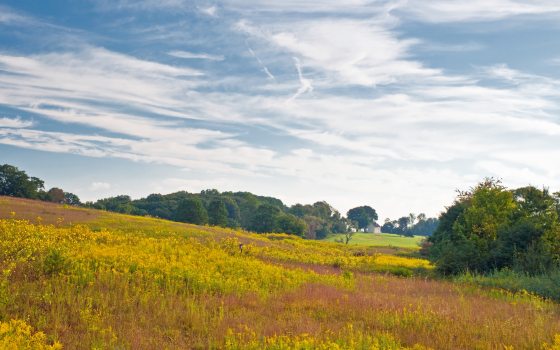
You may know Longwood Gardens as one of the world’s great gardens, but did you know its legacy rests on the agricultural lands from which it was built? With more than 170 acres of agricultural farm land on our 1,077 acre property, we are committed to preserving our agricultural heritage and all natural areas in addition to providing renowned garden displays of spectacle and splendor.

In order to protect and preserve our natural resources we developed a land management plan that:

  • Embraces sustainable practices for crop selection and land management.
    We carefully select what crops to grow where and when. We base our decision on crop rotation principles, aesthetics, and other attributes, such as drought tolerance. Each year, at least four different agricultural crops are grown on our site. Other conservation efforts include increasing pollinator diversity and soil quality through the use of conservation strips and no-till land management, such as enhancing natural bird nesting habitats by delaying hay cutting dates until after July 15.

  • Engages and supports the local agricultural community.
    Local farmers tend our fields using organic fertilizers, including Longwood’s own compost that produced from Gardens activities. All crops harvested stay within a 50 mile radius to support local agriculture including equine, dairy, mushroom, and specialty seed production.

Displays & Upcoming Events

element callout2.xsl WhatsinBloom

What's in Bloom

A team of Longwood Volunteers gathers horticultural highlights from the Outdoor Gardens and Conservatory. Download a pdf of their top picks for the week, including photos and locations.

Find out what's in bloom

element callout2.xsl Victoria_Exhibit

Secrets of Victoria: Waterlily Queen

On view May 25–September 2

Journey to the wild, remote flood plains of South America and to the great gardens of Europe and North America to discover Victoria, the waterlily queen.

Find out more

element callout2.xsl TrialGarden

Visit our New Trial Garden!

When you visit our Idea Garden you will discover something new: our first-ever Trial Garden on view for our guests. This square space houses more than 250 cultivars within 10 genera: Clematis, Dahlia, Paeonia, Capsicum, Agastache, Salvia, Pentas, Lantana, Colocasia, and Canna.

Find out more

element callout2.xsl BTGG_Days

Beyond the Garden Gates Days & Nights

Enjoy family-fun activities, an outdoor concert, and behind-the-scenes experiences.

Find out more