Explore Longwood Gardens

Wide and soaring indoor view of glass house with arched glass roof, arched windows, lush greenery, floral accents, and a series of waterfalls flowing into a pathway of water.
Becca Mathias

From our humble beginnings as a Quaker farmstead and arboretum, to Pierre S. du Pont’s forward-thinking stewardship, to today’s collection of renowned landscape designers, horticulturists, and architects, our great garden of the world evolves and emerges again and again.

Through Longwood Gardens and its program of outstanding horticultural display, every visitor to the Gardens has the opportunity to gain, culturally and spiritually, a better peace of mind.

Russell J. Seibert, Longwood’s first director
Explore nearly 200 acres of lush, formal gardens, open meadows, and winding paths to breathtaking Brandywine Valley vistas. Together, mesmerizing displays, feats of engineering, and science-based research and conservation work harmoniously toward the overarching goal to unite and inspire our guests in appreciation of beauty—as only Longwood can. 

Explore Our Gardens

  • Our Districts
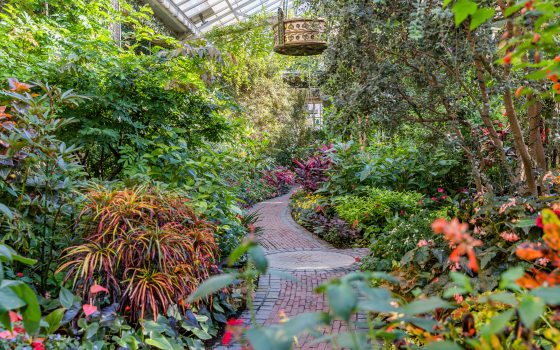
    A stone path winds through a lush room of colorful plants with a hanging light above

    Our Districts

    Explore nearly 200 acres of lush, formal gardens, open meadows, and winding paths.

  • Our Seasons
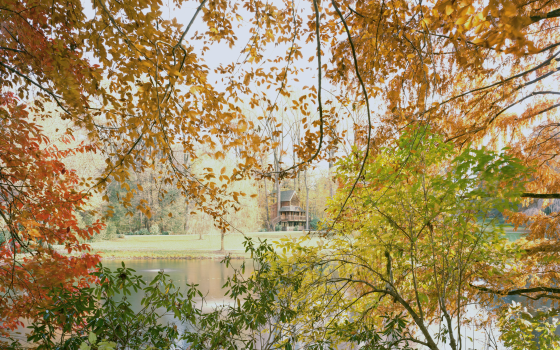
    looking through fall leaves to the canopy cathedral treehouse

    Our Seasons

    We honor the four seasons with five unique Longwood seasons, celebrating the bounty of our gardens throughout the cycles of renewal, growth, and ever-evolving splendor. 

  • Our Plants
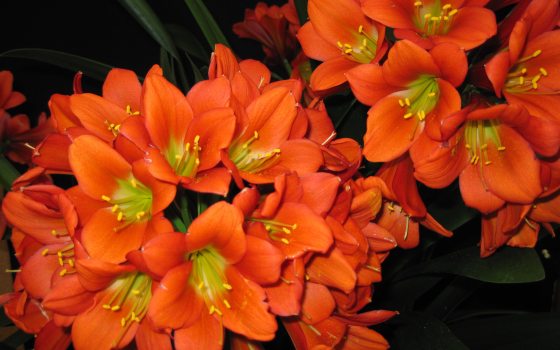
    close up of orange Clivia Miniata with green and yellow center

    Our Plants

    Explore over 10,000 species and varieties of plants, representing 200 different plant families. 

  • Our Science
    A person holds a small vial with plant material inside in a lab

    Our Science

    Our scientific work lays the groundwork for discoveries that expand our understanding of the natural world and help perpetuate and celebrate its beauty for generations to come.

  • Aloe

    This evergreen succulent from east tropical Africa is known for its towering height potential (it can grow up to nearly 10 feet tall—ours are about 2.5 feet tall now), as well as its vibrant red blooms that appear like sparks. We received an Aloe nyeriensis in 1969 and have been growing and propagating it ever since. Growing Aloe nyeriensis completely in-house is a process that takes more than 16 months of two warm cycles and a cold cycle, with manipulated daylength along the way. In the West Conservatory, its brilliant flower spikes rise above the foliage in a bold and splendid display, commanding attention and adding striking vertical interest to the space.  Discover a variety of colorful aloes currently in bloom in our West Conservatory!  
  • Pincushion

    Leucospermum ‘Brandi Dela Cruz’ is a South African shrub known around the world as a popular cut flower. In South Africa, it is a popular garden plant producing bright orange pincushion flowers that are 5 inches wide and held on 30-inch stems. The genus name Leucospermum comes from the Greek word 'leukos' meaning "white", and 'sperma' meaning "seed". This is in reference to the white fleshy skin that covers the seeds. This evergreen shrub that will grow upwards of 7 feet tall if the flowers are not cut annually.